Latest Post Page
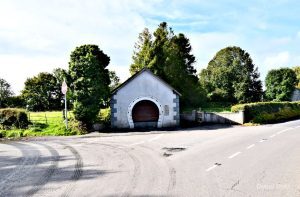
In 19th-century rural Ireland, the blacksmith and the blacksmiths Horseshoe shaped forges was at the heart of community life. His forge was more than just a workshop—it was a gathering place where neighbours exchanged news while waiting on a repair or a shoeing job. In an age before mass industry reached the countryside, the smith’s skill kept farming, transport, and daily life running.
The Blacksmith’s Work
The work was physically demanding and wide-ranging. A blacksmith shod horses, but that was only part of his trade. He made and repaired ploughs, spades, scythes, axes, hinges, nails, gates, and cart fittings. In farming districts, he was indispensable: if a plough broke at the start of the planting season, it was the smith who restored it in hours rather than days. In coastal or bogland areas, he might fashion specialized tools for fishing or turf-cutting.
Smiths relied on skill as much as strength. They judged iron by the color of its glow, shaping it with hammer blows in rhythm with the bellows’ breath. Each job required precision—too much heat, and the metal lost its temper; too little, and it would crack under the hammer. Apprenticeships could last years before a young man was trusted with important work.
The Horseshoe Shaped Forge
The forge was the blacksmith’s domain. Many were simple, stone-built cabins with a thatched or slated roof, a wide door for animals and carts, and a chimney for the smoke. Inside, the essentials were the hearth, bellows, anvil, tongs, and hammers. The fire glowed constantly, and the clang of iron on iron carried through the village.
Some forges, especially in certain regions, were distinctively shaped like a horseshoe. This design wasn’t just decorative. The broad curve gave space for large animals to be led in and turned, while also symbolizing the trade itself. The horseshoe shape was practical and emblematic—anyone passing by knew immediately they were at a smith’s door.
Social Role
Beyond their craft, blacksmiths held a respected position in rural Ireland. Their work carried an air of mystery: they “tamed” fire and bent iron to their will. Folklore often cast them as half-magician, half-artisan, with a touch of danger about their power. In villages, the forge doubled as a hub of conversation and storytelling. Long evenings might see neighbors lingering by the fire, swapping tales and debating politics, while sparks from the anvil lit the dark.
By the end of the 19th century, the blacksmith’s world was beginning to change. Industrial production and factory-made goods slowly reduced the demand for handmade tools. Yet in the Irish countryside, far from railways and cities, the smith remained essential well into the early 20th century, a figure of both necessity and tradition.
I have found six, blacksmiths Horseshoe shaped Forges, in my local County of Offaly.
Curragh
built c.1870.The craftsmanship of the stone blocks of the arch framing, shows remarkable craftsmanship, highlighted by crisp nail-head decoration and the clear groove of the horseshoe arch
Clonbulloge
Built 1865-1870
Gurteen
After its use as a forge, the building later functioned as a shop. Traces of the former post box remain visible on the wall.
Killeigh
Once a busy forge, this building is now a home, standing directly on the street front. Despite modern extensions and alterations, its historic façade endures, preserving the spirit of the original structure
Rahan
There was a forge on this site for over 200 years.
Walsh Island
I could not find information about this forge. [...]
Read more...
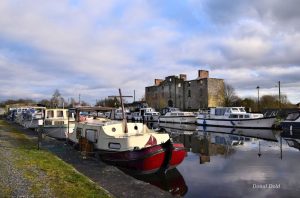
A few images taken in Shannon Harbour and Shannon Bridge, a few years ago. I got there late in the evening, so not many great images. A visit back is due soon [...]
Read more...
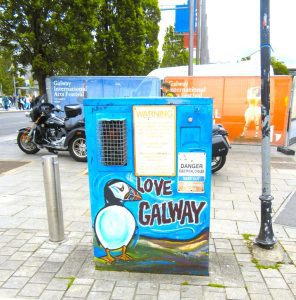
Images from Galway centre, I took on July 9th 2024. It was my first time in years I was in Galway. It was full of tourists, even though the weather was dull and showery. I only had my old Canon SX610 Powershot, so these images will not be the sharpest. Click on the photos to have a larger view of the images, if you wish. My favourite Image from all the Images from Galway City Centre is the busker, with the staffie dog. Let me know your favourite in the comments.
Flowers outside shops in Galway City
Bikes with Flowers
Ladies dressed with the same colours as the shop they are passing
Monuments Statues in Galway City Centre
OSCAR WILDE & EDUARD VILDE STATUES
Replica of Pádraic Ó Conaire statue
Galway Girl statue.
Murals in Galway City Centre
Many of the murals are created by local and visiting artists during festivals like Galway International Arts Festival, giving the streets a constantly changing gallery feel. They often carry social or cultural messages, capturing everything from Irish heritage to contemporary issues.
Post supported by
Buskers in Galway City Centre
Buskers are at the heart of Galway City’s character. Walk down Shop Street or Quay Street on any given day, and you’ll hear a mix of fiddles, guitars, drums, and voices filling the air. Music pours from every corner — traditional Irish ballads blend with indie covers, jazz riffs, and original songs from young artists finding their sound.
Pubs in Galway City Centre
The pubs in Galway City are more than places to drink — they’re the heartbeat of the town. From historic spots with stone walls and open fires to lively music bars where trad sessions spill into the street, each pub has its own character.
St Nicholas Collegiate Church, Galway City
St Nicholas’ Collegiate Church, in the heart of Galway City, is the largest medieval parish church still in use in Ireland. Founded in 1320 and dedicated to St Nicholas, the patron saint of sailors, it reflects Galway’s deep ties to the sea and its role as a thriving port in the Middle Ages. Over the centuries, it has witnessed the rise of the merchant “Tribes of Galway,” the turbulence of the Reformation, and even visits from figures like Christopher Columbus, who is said to have prayed there in 1477 before his transatlantic voyages. The church’s architecture blends Gothic features with later additions, and its weathered stone walls still bear the marks of time, including damage from Cromwellian soldiers in the 17th century. Today, it remains not only a place of worship but also a living monument to Galway’s rich cultural and civic history.
Street
Waiting for Dinner
Galway City Shopping Centre [...]
Read more...
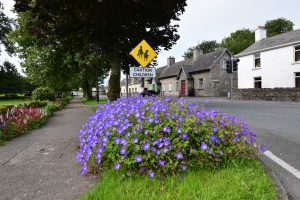
These images from Geashill village, County Offaly, were taking on a bank holiday Monday, so it was nice and quite. Geashill is about seven miles from Tullamore and is a beautiful small picturesque village. it has won numerous Tidy Towns categories. To read the history and more information of the village please see the links here. Geashill Tidy Towns Website and Wikipedia
Houses in Geashill.
Old shop now closed
Old Post Office
Was Hamill’s pub. I think it has changed hands lately.
The bog oak in the town has 22 animal and birds carved on it.
Post supported by
St Marys Church and Grave Yard, Geashill
They were famous for having a pig fair
The Old School House Geashill [...]
Read more...
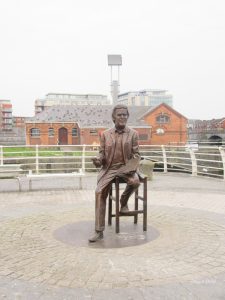
There is a good few missing, which I will try and take, some time soon. The featured photo is Terry Wogan. If you know, what the name of the memorial on the bottom left is, please let me know. [...]
Read more...
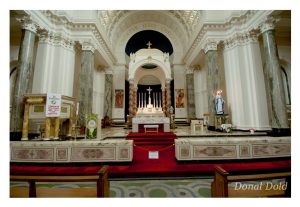
The Church of Saints Peter and Paul, Athlone, is one of the most beautiful building and church I have ever been in. It took 7 years to build the church, between the years 1932 to 1939. The stain glass windows are from the famous Harry Clarke studio. The parish website link is here [...]
Read more...
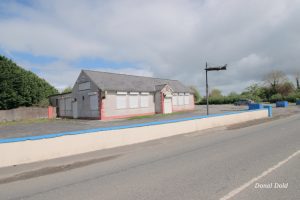
I remember when Healy’s Pub, Ballycumber, County Offaly, was a small thatch pub. That was knocked and this pub was built. Totally different than the original. It went for a few years, normally rented out to third party publicans. Not to sure when it closed, or what the plans are for it.
See more posts tagged with abandoned pubs. Click Here [...]
Read more...
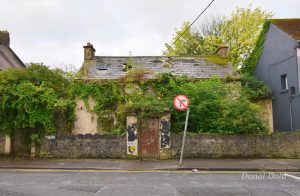
If you look in most towns around ireland, you will see old abandoned houses. Some are fixable, some are to far gone. Here is some Old Abandoned houses in Tullamore
This house above is on Church Street, Tullamore
This is out by Durrow. It looks like a gate lodge but Durrow Abbey is about another mile or so down the road. I will have to look into it.
Some images of abandoned houses in O Moore Street, Hight Street and Harbour Street, Tullamore
This is on the Tullamore to Clara road. It was the home of a local farmer who passed a few years ago. I think there is a business been run from there now, with all the pallets been stored.
This house looks okay, looks weather sealed, so I don’t know what the story is with it
This house is out by Gurteen, Killeigh. I think I saw scaffolding around it a few weeks ago. It would be good if someone is trying to make it liveable.
.
I think there is plans for the road where this house is located, so it could be heading to be knocked down. I stand to be corrected though
I do not know if this was a house. Kind of looks like one. Its out by the lock in Ballycommon. [...]
Read more...
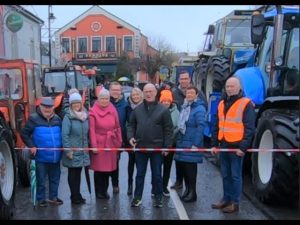
Tullamore Tractor Run 2022. This videos is a walk around Market Square Tullamore, where the tractors gather before the run. Tullamore tractor run normally collects for Dochas, Tullamore, which is a support centre for cancer patents, pass and present. So this year, 2022, members of Dochas cut the ribbon for the start of the run. [...]
Read more...
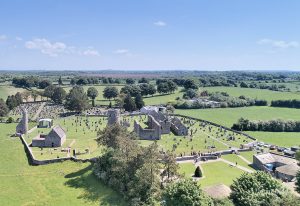
Clonmacnoise is a historic monastic site located in County Offaly, Ireland, along the River Shannon. It was founded in the 6th century by Saint Ciarán of Clonmacnoise, one of the Twelve Apostles of Ireland. Over the centuries, it became one of the most important religious, scholarly, and cultural centers in Ireland, particularly during the early medieval period.
The Grounds
Monastic Settlement:The site includes the remains of a monastic complex, including churches, high crosses, and round towers.
The monastery became an important center for learning, attracting scholars from all over Ireland and Europe.
Religious Significance:It was one of the most prominent monastic sites in Ireland and a key pilgrimage destination during the medieval period.
Many important Irish saints, monks, and scholars lived and worked at Clonmacnoise.
Some walls of the churches
Ruins of Churches:Clonmacnoise has several well-preserved church ruins, including the Cathedral (main church) and other smaller buildings used for various purposes.
The cathedral was one of the most important in medieval Ireland and is a significant landmark.
Where Pope John Paul 11 said mass from
Pope John Paul II celebrated Mass at Clonmacnoise, on September 29, 1979. This was part of his pastoral visit to Ireland during his first papal pilgrimage to the country. The Mass at Clonmacnoise was one of the many significant events during that visit.
Inside the visitor centre
High Crosses:The site is home to several impressive high crosses, which are intricately carved and reflect the artistry of early Irish Christianity.
The crosses in the grounds are not the original. The original have been moved inside the visitor centre, to protect them against the elements
The area around and including Clonmacnoise has yielded many historical artefacts, including ancient manuscripts, crosses, and other religious objects, which are now housed in museums and contribute to our understanding of early Irish Christianity.
Visiting Clonmacnoise gives a fascinating glimpse into Ireland’s early Christian period and its monastic traditions. [...]
Read more...
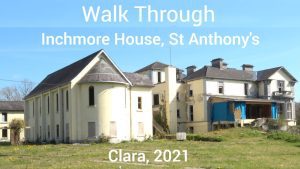
Inchmore House, also known as St. Anthony’s, is a historic property located in Kilcoursey, Clara, County Offaly, Ireland. Built in 1846 by architect J.S. Mulvany for the Goodbody family—a prominent merchant family of that era—the house features a two-story façade with a columned portico and bows to the gable ends, characteristic of Mulvany’s neoclassical style.
In the 1930s, the Franciscan order acquired the property, adding dormitories and establishing St. Anthony’s boarding school, which operated until its closure in 1990. Following years of disuse and deterioration, the property underwent refurbishment in recent years. [...]
Read more...
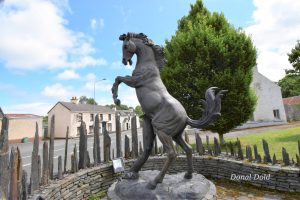
These photos are of a statue in Horseleap on the Offaly Westmeath border. Supposedly bought by Ferrari for Eddie Irvin [...]
Read more...